
Planet 7 casino Plinko
Introduction
I look at Plinko differently from the way it is often presented on gaming pages. At first glance, it seems almost too simple to deserve a long analysis: you choose a stake, set a risk level, drop a ball, and watch it bounce through a field of pins until it lands in a payout slot. But that surface-level simplicity is exactly why Planet 7 casino Plinko deserves a closer review. The interface is clean, the rules are easy to grasp in seconds, and yet the actual experience can shift dramatically depending on settings, pace, and expectations.
For players in Canada exploring Planet 7 casino, Plinko can stand out because it strips away the visual noise found in many modern slot releases. There are no reels, no bonus rounds layered on top of each other, and no need to decode payline structures. Instead, the tension comes from trajectory, distribution, and the constant contrast between small frequent returns and the occasional high multiplier that may or may not appear during a session.
That is what makes this format worth discussing properly. Plinko is not just a casual distraction or a trendy name attached to a gambling product. It is a game built around visible randomness, adjustable exposure, and a very specific rhythm. If a player wants to understand whether Planet 7 casino Plinko is actually worth trying, the key is not to ask whether it looks entertaining. The better question is what this design really offers in practice, where the pressure points are, and what kind of player is likely to enjoy it over time.
What Plinko is and why it attracts so much attention
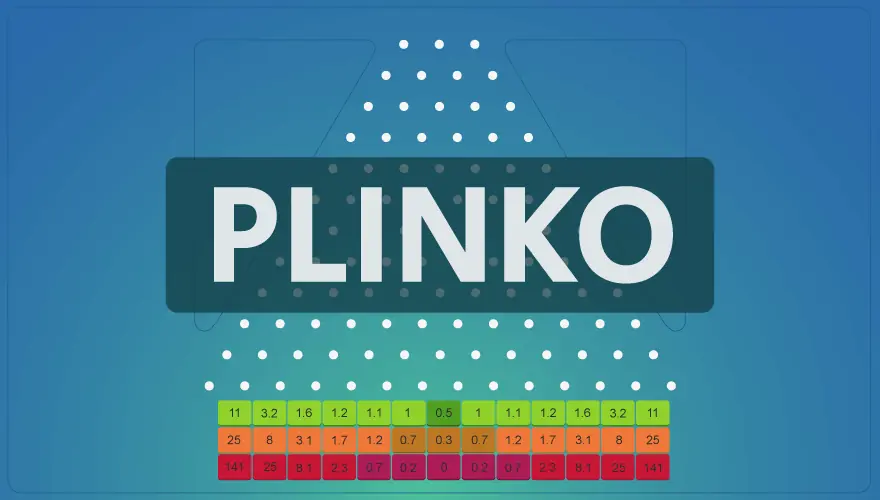
Plinko is a chance-based casino game inspired by the classic pegboard concept. A ball drops from the top of the board, collides with rows of pins, and gradually moves left or right until it reaches one of the payout zones at the bottom. Each final position corresponds to a multiplier. Lower multipliers tend to sit near the center, while the more aggressive rewards are usually placed toward the edges, where the ball lands less often.
The reason this format draws attention is easy to understand. It gives the player something many digital casino products do not: a visible path to the result. In a slot, the outcome appears when the reels stop. In roulette, the spin resolves in a single visual event. In Plinko, the result unfolds step by step. You can see the ball deflect, hesitate, and drift. That visual journey creates involvement even though the underlying outcome is still driven by random number generation.
I think this is one of the strongest psychological hooks in Planet 7 casino Plinko. The player feels connected to the process because the result is not revealed instantly. The board creates anticipation in small increments. Every contact with a pin suggests possibility. That does not mean the player has influence over the path, but it does mean the game translates probability into something the eye can follow.
Another reason Plinko became so noticeable is that it fits modern play habits. It can be fast, almost frictionless, and highly repeatable. A player can complete many rounds in a short period without dealing with complex rules. That convenience matters. The game is easy to enter, but it does not always remain easy emotionally, especially once higher risk settings are involved.
How the core Plinko system works in practice
To understand Planet 7 casino Plinko, a player should focus on four practical elements: stake size, board structure, risk level, and payout distribution. These are the settings that shape the session far more than the minimal interface suggests.
The basic action is straightforward. You select your bet, choose a risk profile, and release the ball. As it falls through the pins, each collision sends it slightly left or right. By the time it reaches the bottom, it lands in one of several multiplier slots. The payout is your stake multiplied by that final value.
What matters in reality is not just where the ball lands once, but how the board is mathematically arranged over many drops. The center of the board usually captures a larger share of outcomes, which is why lower multipliers appear there more often. The outer positions, where the highest returns are placed, are statistically harder to reach. This creates a distribution that feels intuitive even to new players: ordinary outcomes cluster in the middle, while standout results sit at the margins.
That visible structure can be misleading if a player reads too much into short-term patterns. One memorable observation about Plinko is that it often feels more “readable” than it really is. Because the path is animated, some players start believing they can sense when the board is leaning left or right. In reality, that impression can become a trap. The movement is engaging, but it should not be mistaken for a reliable pattern source.
| Element | What it does | Why it matters to the player |
|---|---|---|
| Stake size | Determines the monetary value of each drop | Directly affects session cost and emotional pressure |
| Risk level | Changes how payouts are distributed across the board | Can shift the experience from steady and modest to sharp and swing-heavy |
| Board layout | Defines the number and placement of payout zones | Influences how often central outcomes appear versus edge outcomes |
| Multiplier range | Sets the possible return values | Helps frame realistic expectations before the session starts |
On Planet7 casino, the appeal of this setup is that the game can be understood quickly, but the practical results depend heavily on how the player configures risk. A low-risk board can produce a smoother flow of minor returns. A high-risk board can create long dry stretches interrupted by occasional spikes. Same game, very different feel.
Why the pace of Plinko feels different from most casino games
Plinko has a rhythm that is neither identical to slots nor comparable to Planet 7 Casino blackjack review. That is one of the reasons it keeps attention so effectively. The action cycle is short, but not instantaneous. There is enough animation to create suspense, yet not so much that the session feels slow. This middle ground is important.
In classic slots, the spin resolves after a fixed animation and the player reads the result from symbol combinations. In Plinko, the eye follows a moving object through a visible route. That route adds a layer of anticipation without adding strategic depth. It is suspense built from motion rather than from feature reveals or reel expansions.
On a practical level, this means sessions can accelerate quickly. A player may feel that the game is calm because the interface is uncluttered, but the betting frequency can become surprisingly high over time. That is one of the more important things to understand before launching Planet 7 casino Plinko. The game looks lightweight, but a fast sequence of drops can consume a bankroll at a rate that feels closer to rapid-fire casino content than to a casual arcade-style diversion.
A second observation that stands out in Plinko is this: the silence between big outcomes is often shorter visually than it is financially. Because each drop includes movement and suspense, the player stays engaged even when results are underwhelming. That can make losing stretches feel less severe in the moment than they actually are on the balance. It is not deception in any technical sense, but it does affect perception.
Risk levels, distribution, and what they change during a session
Risk settings are not cosmetic. They are central to how Plinko behaves. When a player changes from low to medium or high risk, the board does not simply become “more exciting.” The distribution of outcomes changes in a way that affects hit frequency, session stability, and emotional volatility.
At lower risk, the board usually offers a tighter spread of multipliers. The highest possible returns are smaller, but modest outcomes tend to appear more often. This can make the session feel controlled. The player sees more frequent returns, even if those returns are not large enough to create major upward swings.
At higher risk, the spread becomes wider. The top multipliers become more attractive, but the path to them is narrower in practical terms. More drops may end with weak results or no meaningful recovery at all. This setting can generate sharp peaks, but it also increases the chance of prolonged negative sequences.
- Low risk: better suited to players who want to observe the format, manage session length, and avoid extreme swings.
- Medium risk: often the most balanced option for players who want visible upside without turning every short run into a bankroll stress test.
- High risk: designed for players who accept long unproductive stretches in exchange for a chance at rare, outsized multipliers.
This is where Planet 7 casino Plinko becomes more nuanced than it first appears. Many newcomers assume the game is simple because the controls are simple. But the risk profile changes the entire emotional texture of the session. Low-risk Plinko can feel almost methodical. High-risk Plinko can feel abrupt, tense, and occasionally frustrating, even when the interface looks identical.
What players should understand about probability before they start
Plinko is built on probability, but it presents that probability in a visually intuitive way. That can help understanding, but it can also create false confidence. The board suggests a bell-shaped distribution, and in broad terms that is what many players experience: central outcomes appear more often, edge results less often. Still, it is important to remember that each drop is an independent event within the game’s programmed logic.
A player should not assume that several central landings make an edge result “due.” Nor should a near miss on a high multiplier be treated as evidence that the next drop is close to connecting. This is a common mistake in games guide where movement is visible. The animation encourages narrative thinking. The mathematics does not reward it.
What matters more is understanding expected session behavior:
- small and middling outcomes usually form the bulk of the experience;
- larger multipliers are part of the appeal but not something to plan around;
- short-term results can vary sharply, especially on aggressive settings;
- the feeling of momentum may not match the actual balance trend.
That last point is worth stressing. In Plinko, entertainment value and financial performance can drift apart quickly. A session may feel active and engaging while still moving steadily downward. For some players, that is acceptable because they value the spectacle and tempo. For others, it becomes a reason to step away.
How Plinko differs from classic slots and other casino formats
The easiest comparison is with video slots, because that is where many online players come from. But Planet 7 casino Plinko does not behave like a reel-based product. Slots are structured around symbol combinations, paylines or ways systems, bonus triggers, and feature rounds. A lot of their appeal comes from layered events: wilds, scatters, free spins, cascading reels, multipliers, and themed audiovisual design.
Plinko removes almost all of that. There are no symbols to interpret, no bonus buy logic, and usually no hidden complexity. The central event is the drop itself. This gives the game a cleaner profile, but also a narrower one. If a player enjoys discovery, theme progression, or feature variety, Plinko may feel too stripped down after a while.
Compared with roulette, Plinko is less about a single binary-style resolution and more about watching a path unfold. Compared with crash-style products, it offers less direct tension around timing decisions but more visual randomness. Compared with dice-based casino games, it feels less abstract because the result is animated rather than instantly displayed.
| Format | Main appeal | How Plinko differs |
|---|---|---|
| Classic slots | Features, themes, bonus rounds | Plinko is simpler, faster to read, and less feature-driven |
| Roulette | Clear bet structure and single-spin suspense | Plinko adds a visible route to the outcome instead of one final reveal |
| Crash games | Timing and cash-out decisions | Plinko removes reaction-based choices and focuses on distribution |
| Dice-style games | Fast, numbers-based results | Plinko feels more tactile and visually involving |
So the real difference is not just aesthetic. Plinko occupies a middle space between passive randomness and visible progression. That combination is rare enough to make it memorable.
Where the game performs well and where it shows limits
From an analytical point of view, Planet 7 casino Plinko has several clear strengths. The first is accessibility. A new player can understand the core loop almost immediately. The second is pacing. The game keeps attention without forcing long rounds or complicated decision trees. The third is transparency of structure. The payout zones are visible, and the relationship between central frequency and edge rarity is easier to grasp than in many other casino products.
There is also a practical advantage in how the game supports different temperaments. A cautious player can experiment with lower risk and smaller stakes. A more aggressive player can chase wider multipliers. The same format serves both, though not equally well.
Its limitations are just as real. Plinko does not offer much thematic depth. It can become repetitive if a player needs evolving features or a stronger sense of progression. The visual path of the ball is engaging, but after enough rounds the structure remains the same. There is no unfolding narrative, no changing reel behavior, and no bonus layer to reset attention.
A third observation I would highlight is that Plinko can feel more personal than slots when things go well, and more arbitrary when they do not. Because the player watches the ball bounce toward possibility, a high multiplier can feel earned even though it is not. The opposite is also true. Repeated weak landings can feel strangely unfair, even though they are fully consistent with the design.
- Strong side: easy entry, clear flow, strong visual suspense, adjustable session style.
- Weak side: limited long-term variety, potential for fast bankroll drain, and a tendency to create misleading pattern impressions.
Who Plinko suits best and who may want a different format
I would say Planet 7 casino Plinko is best suited to players who value immediacy, clean presentation, and a direct connection between stake and outcome. It works especially well for those who do not want to learn complicated pay systems or wait for infrequent bonus rounds to justify a session. If the appeal of gambling for a player lies in short decision cycles and visible suspense, Plinko can be a very natural fit.
It is also a reasonable choice for players who like to control the tone of the session through risk settings. That flexibility matters. Someone who wants a steadier run can choose a lower-risk approach. Someone willing to accept harsher variance can push the board in a more aggressive direction.
On the other hand, this format may disappoint players who want strategic input, richer audiovisual design, or layered content. If someone enjoys feature-heavy slots, live casino games guide interaction, or games where betting structure itself is part of the challenge, Plinko may feel too narrow. It can also frustrate players who react strongly to uneven short-term outcomes, because the simplicity of the format does not soften the swings.
In plain terms, this is a game for players who appreciate probability made visible. It is less suitable for those who need complexity to stay engaged.
What to check before launching Planet 7 casino Plinko
Before starting a session, I recommend looking at Plinko in practical rather than promotional terms. The key question is not whether the board looks fun. It is whether the settings match the kind of session you actually want.
- Check the available risk levels and understand that they change session behavior, not just reward potential.
- Set a stake that makes sense for repeated drops, not just for a single trial round.
- Use demo mode if available to understand rhythm and distribution before committing real money.
- Decide in advance whether you are testing the format casually or chasing higher multipliers with full awareness of the downside.
- Pay attention to speed. A fast sequence of low-value drops can still add up quickly.
This matters because Planet7 casino Plinko can create a false sense of control through simplicity. The interface is easy. The outcomes are not. The clean design should help a player make better decisions, not tempt them into underestimating the pace of spend.
Final verdict
Planet 7 casino Plinko offers a very specific kind of gambling experience. It is not trying to compete with slots on theme depth or with table games on decision-making. Its strength lies elsewhere: visible randomness, quick rounds, adjustable risk, and a form of suspense built from motion rather than from layered features.
What I find most compelling about Plinko is that it translates abstract probability into something a player can watch unfold. That makes the game immediately approachable. At the same time, that same clarity can hide how different the experience becomes once risk settings change and a session starts to stretch. Low-risk play can feel smooth and controlled. High-risk play can become sharp, uneven, and emotionally demanding very quickly.
So what does Planet 7 casino Plinko really offer? It offers a clean, high-tempo format where the appeal comes from repeated drops, visible trajectories, and the possibility of disproportionate returns at the edges of the board. Its key strengths are accessibility, pace, and strong moment-to-moment tension. Its weak points are repetition, limited depth, and the ease with which players can misread randomness as momentum.
For the right player, that combination works extremely well. If you want a straightforward casino game with immediate feedback and flexible risk, Plinko is worth trying. If you prefer richer mechanics, stronger strategic involvement, or longer-form feature development, another format will probably suit you better. That is the honest conclusion: Plinko is simple to enter, but not simplistic in effect, and that distinction is exactly why it remains so compelling.
FAQ
How does Planet 7 Plinko work once the game is running?
A ball drops from the top and bounces through the board until it lands in one of the slots at the bottom. Each landing zone has its own multiplier, so outcomes depend on where the ball finishes.
What should be checked before starting a real-money Plinko session?
Confirm the stakes or bet size shown for the current Plinko mode, then review the payout or multiplier values displayed on the board. A quick scan of the rules and any on-screen limits helps prevent surprises during play.
Why do some Plinko rounds feel higher risk, even when the rules look the same?
Plinko is driven by multipliers across landing zones, so variance can feel stronger at different stakes. Volatility may also feel different depending on the game setting and current payout distribution displayed by the slot zones.
If an account has multiple login sessions, will Plinko still run correctly?
The game relies on the active session for balance and limits. Logging in again or switching to a single browser or device session can fix sync issues, especially if the bet panel looks inactive.
Are demo and real-money Plinko sessions shown differently on Planet 7?
Demo play and real-money play use different balance indicators in the interface. Switching mode before starting the ball drop ensures the correct funds and rules are applied for each round.